Tesamorelin has become one of the most compelling peptides in metabolic and longevity research. Its unique ability to reduce visceral adipose tissue (VAT)—the deep, dangerous fat stored around the organs—has earned it a reputation as a “stubborn belly fat obliterator.” While the phrase is bold, the science behind Tesamorelin’s mechanism is even more impressive.
Researchers continue to explore Tesamorelin for its effects on fat metabolism, growth hormone signaling, and overall metabolic health. This SEO‑optimized deep dive breaks down the benefits, mechanisms, and emerging research that make Tesamorelin one of the most studied peptides in the metabolic‑health space.

What Is Tesamorelin?
Tesamorelin is a synthetic analog of growth hormone–releasing hormone (GHRH). Its structure includes a stabilizing trans‑3‑hexenoyl modification that protects it from rapid enzymatic breakdown, allowing it to activate the hypothalamic–pituitary–growth hormone (HPGH) axis more effectively than natural GHRH.
In research environments, Tesamorelin is used to study:
- Growth hormone secretion
- IGF‑1 signaling
- Visceral fat metabolism
- Hepatic gene expression
- Age‑related metabolic decline
Its stability and targeted action make it a powerful tool for exploring metabolic pathways that influence fat storage and energy balance.
How Tesamorelin Works: The Mechanism Behind the Fat Targeting Effect
Tesamorelin binds to GHRH receptors in the pituitary gland, stimulating natural, pulsatile growth hormone release. This leads to increased IGF‑1 levels, which influence:
- Lipolysis (fat breakdown)
- Protein synthesis
- Mitochondrial function
- Glucose and lipid metabolism
What sets Tesamorelin apart is its disproportionately strong impact on visceral fat, the most metabolically harmful type of fat.
Why visceral fat matters
Visceral fat is linked to:
- Insulin resistance
- Cardiovascular risk
- Chronic inflammation
- Fatty liver
- Hormonal imbalance
It is also notoriously resistant to diet and exercise, which is why Tesamorelin’s targeted effect has drawn so much attention.
Tesamorelin as a “Stubborn Belly Fat Obliterator”
While no peptide is a magic solution, Tesamorelin’s impact on VAT reduction is so consistent in research settings that it has earned a reputation for its belly‑fat‑targeting power.
Why visceral fat is so stubborn
Unlike subcutaneous fat, visceral fat is hormonally active and deeply embedded around the organs. It responds poorly to traditional fat loss methods.
Why Tesamorelin stands out
Research shows Tesamorelin’s GH‑mediated lipolytic activity preferentially targets visceral fat stores. This makes it uniquely valuable for studying:
- Abdominal fat metabolism
- Hormonal regulation of adipose tissue
- Interventions for metabolic dysfunction
In short, Tesamorelin doesn’t just influence body composition—it targets the most dangerous and stubborn fat depot in the body.
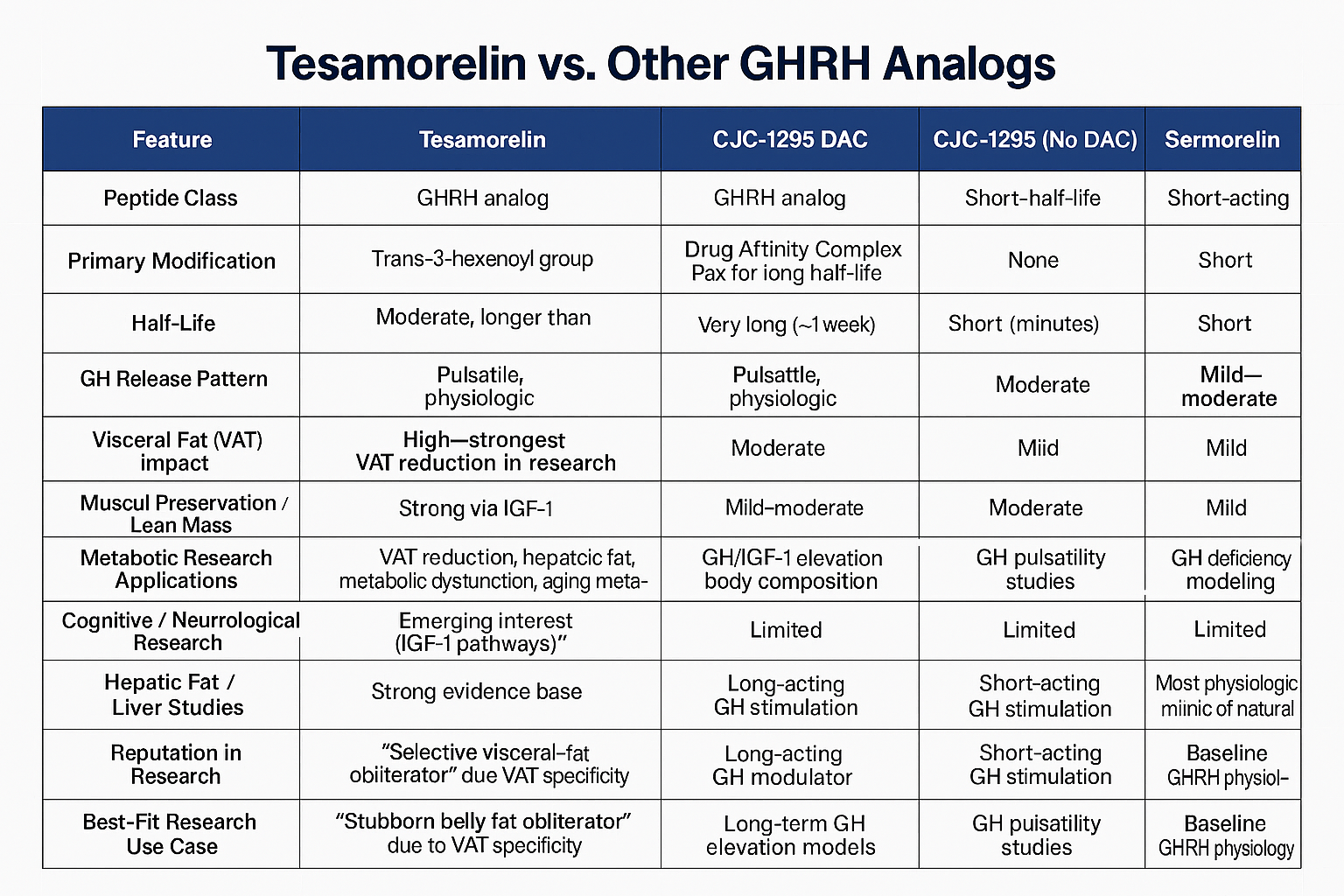
Research Supported Benefits of Tesamorelin
1. Significant Reduction in Visceral Adipose Tissue (VAT)
Multiple controlled studies show Tesamorelin’s ability to reduce VAT, making it one of the most reliable tools for studying abdominal fat reduction.
2. Improved Metabolic Function
Tesamorelin’s influence on GH and IGF‑1 signaling supports:
- Enhanced lipid oxidation
- Better glucose metabolism
- Improved insulin sensitivity
- Reduced liver fat accumulation
These effects make it a valuable peptide for metabolic research.
3. Muscle Preservation and Protein Synthesis
Growth hormone and IGF‑1 play key roles in maintaining lean mass. Tesamorelin is frequently used to study:
- Muscle retention during caloric deficits
- Age‑related muscle loss
- Tissue repair and recovery
4. Potential Cognitive and Neurological Benefits
Early research suggests GH/IGF‑1 pathways may influence:
- Neuroplasticity
- Memory
- Cognitive aging
While still emerging, this area of study is gaining momentum.
5. Liver Health and Hepatic Fat Reduction
Tesamorelin has been used in research exploring hepatic transcriptomics and fatty liver pathways. Its impact on liver fat metabolism is one of its most promising secondary benefits.
What Makes Tesamorelin Unique?
1. Enhanced Stability Through Hexenoyl Modification
This structural modification allows Tesamorelin to remain active longer than natural GHRH.
2. Physiologic, Pulsatile GH Stimulation
Tesamorelin supports natural hormonal rhythms rather than overwhelming the system.
3. Targeted Visceral Fat Impact
Few interventions show such a strong, consistent effect on VAT.
4. Broad Downstream Benefits via IGF‑1 Activation
IGF‑1 influences:
- Tissue repair
- Muscle growth
- Metabolic regulation
Tesamorelin’s controlled elevation of IGF‑1 is central to its research value.
Tesamorelin in Longevity and Metabolic Research
Tesamorelin is increasingly used in longevity‑focused research due to its influence on:
- Mitochondrial function
- Inflammatory pathways
- Lipid metabolism
- Hormonal balance
Researchers are exploring its role in modeling or influencing:
- Age‑related fat redistribution
- Declining GH/IGF‑1 signaling
- Metabolic slowdown
- Cognitive aging
Its ability to activate the HPGH axis makes it a valuable tool for understanding age‑related metabolic changes.
Final Thoughts: Why Tesamorelin Continues to Stand Out
Tesamorelin’s reputation as a “stubborn belly fat obliterator” is rooted in its unique ability to reduce visceral fat—the most metabolically harmful and resistant fat in the body. Its stability, targeted GH stimulation, and broad metabolic impact make it one of the most valuable peptides in modern metabolic and longevity research.