In the world of metabolic peptides, most people still believe weight loss is just “calories in, calories out.” But biology isn’t a math equation — it’s a complex network of hormonal, neurological, and mitochondrial signals. When those signals break down, even the best diet or training plan feels like a temporary fix.
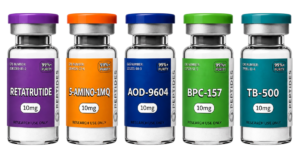
Retatrutide, one of the most advanced research peptides explored today, is designed to support metabolic coordination at a deeper level. Instead of forcing the body to burn calories, it helps restore the communication pathways that drive appetite, energy, fat oxidation, and hormonal balance.
What Makes Retatrutide Different? A Triple‑Pathway Advantage
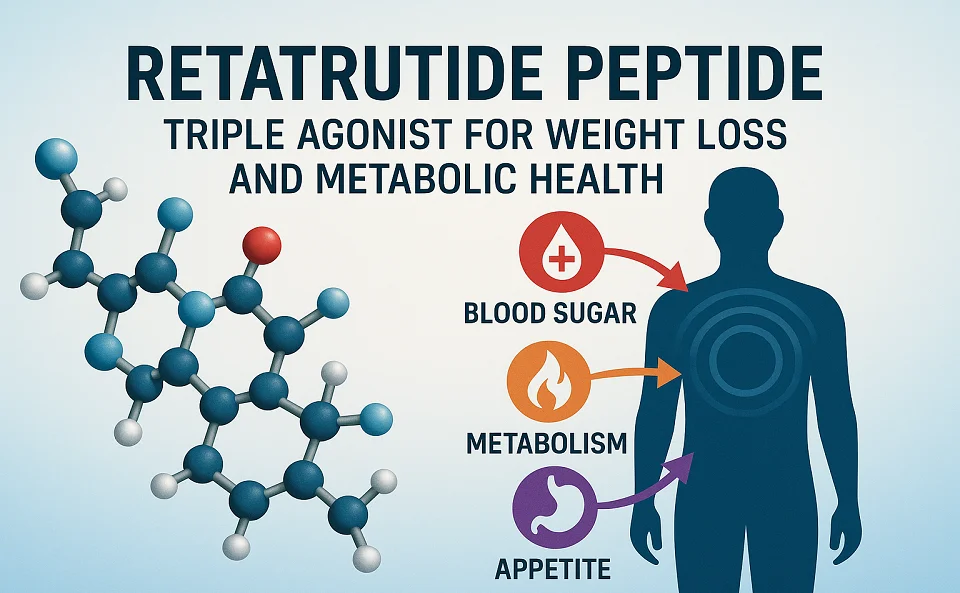
Unlike single‑pathway GLP‑1 agonists, Retatrutide activates three metabolic receptors simultaneously:
| Peptide | Mechanism | Outcome |
|---|---|---|
| GLP‑1 agonists | GLP‑1 only | Appetite reduction, potential muscle loss |
| Dual agonists | GLP‑1 + GIP | Better nutrient partitioning |
| Retatrutide | GLP‑1 + GIP + Glucagon | Broad metabolic coordination and enhanced energy signaling |
Each pathway plays a distinct role:
- GLP‑1 — Appetite & Inflammation Control: Supports appetite regulation, blood sugar stability, and inflammatory balance.
- GIP — Nutrient Partitioning: Helps direct nutrients toward muscle tissue instead of fat storage.
- Glucagon — Energy Mobilization: Supports fat oxidation, liver health, and mitochondrial turnover.
Metabolic Coordination: The Missing Link in Modern Health
Inside every cell, two major pathways determine how the body uses energy:
- AMPK — the energy manager
- mTOR — the growth and repair pathway
Stress, poor sleep, and inconsistent nutrition often push both systems into dysfunction. Retatrutide helps support communication between these pathways, promoting a more balanced metabolic environment.
Liver Health: Clearing the Metabolic Bottleneck
The liver plays a central role in metabolic performance. When it becomes congested with triglycerides or resistant to insulin signals, everything downstream slows.
Retatrutide’s glucagon pathway supports:
- Increased fatty acid oxidation
- Activation of FGF‑21
- Improved lipid handling
- A cleaner hormonal environment

Brain Signaling: Dopamine, Cravings & Cognitive Clarity
Modern fatigue often begins in the brain, not the muscles. Stress, overstimulation, and disrupted dopamine signaling can impair focus and intensify cravings.
Retatrutide supports healthier communication across the gut‑brain axis, which may contribute to:
- Reduced cravings
- Improved clarity and focus
- More stable reward signaling
- A calmer, more regulated mental state
Inflammation & Immune Balance
Low‑grade inflammation can disrupt recovery, mood, and metabolic performance. Retatrutide’s multi‑pathway signaling supports reductions in inflammatory noise, helping restore internal balance.
Retatrutide & Testosterone: A Critical Connection
One of the most overlooked aspects of metabolic peptides is their relationship with hormonal health — especially testosterone.
Retatrutide isn’t designed to replace testosterone, but it can support the environment where healthy hormonal signaling thrives.
How Retatrutide Supports Hormonal Balance
| Mechanism | Potential Effect |
|---|---|
| Improved insulin sensitivity | Better LH responsiveness |
| Liver support | More cholesterol available for hormone synthesis |
| Reduced inflammation | Enhanced androgen receptor sensitivity |
| Dopamine recalibration | Improved drive and libido |
The Longevity Perspective: Mitochondrial Support
Aging is closely tied to mitochondrial decline. Retatrutide supports mitochondrial biogenesis through pathways involving PGC‑1α — a key regulator of energy production.
Conclusion: A Next‑Generation Metabolic Peptide
Retatrutide isn’t a shortcut — it’s a signal‑restoring peptide that helps recalibrate the body’s communication networks. By supporting metabolic coordination, hormonal balance, mitochondrial function, and neurological clarity, it represents a new frontier in metabolic research.